



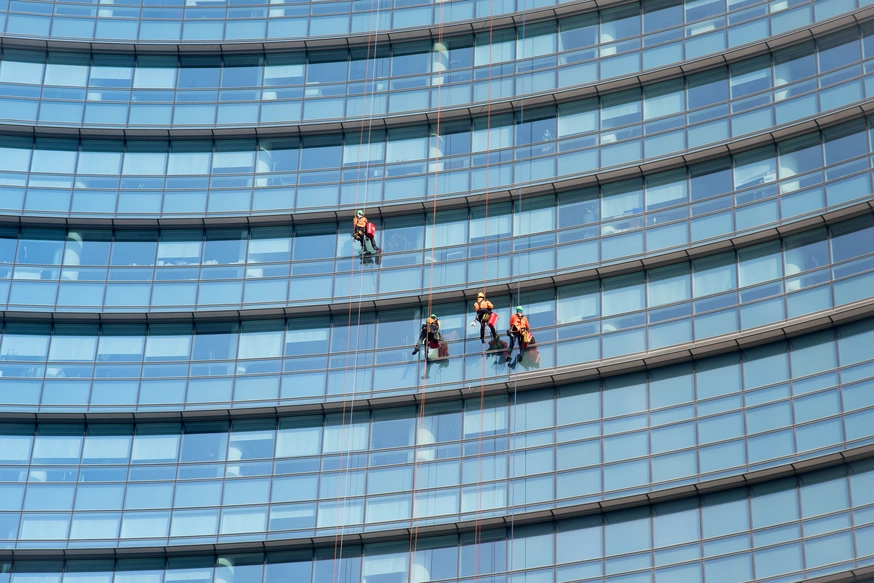
High-rise building cleaning is one of the most complex areas in commercial maintenance. Unlike standard office environments, skyscrapers and multi-floor commercial towers require specialized equipment, trained staff, strict safety protocols, and precise planning. In cities with dense business districts like Downtown Chicago, high-rise cleaning is a daily operational necessity rather than an occasional service.
The challenges involved are not just technical—they are also logistical and safety-driven. Cleaning windows, facades, and exterior surfaces at extreme heights demands a level of expertise that goes far beyond traditional janitorial work.
Height and Safety Risks
The most obvious challenge in high-rise cleaning is working at extreme heights. Any exterior cleaning activity involves significant risk, including falls, equipment failure, or weather-related hazards.
To manage this, cleaning teams must follow strict safety regulations, use certified harness systems, and undergo continuous safety training. Even small errors in safety procedures can lead to serious consequences, making precision absolutely critical.
Specialized Equipment Requirements
High-rise cleaning cannot be performed with standard tools. It requires specialized systems such as suspended scaffolding, rope access gear, aerial lifts, and cradle systems attached to building structures.
These tools must be inspected regularly and operated by trained professionals. Equipment failure at height is not an option, so maintenance and compliance checks are part of the workflow.
Weather Conditions and Environmental Factors
Weather plays a major role in determining when high-rise cleaning can be safely performed. Strong winds, rain, snow, or extreme temperatures can halt operations immediately.
Even minor weather changes can affect stability when workers are suspended at height. This makes scheduling unpredictable and often dependent on real-time environmental monitoring.
Access Limitations
Many high-rise buildings are designed with limited external access points. This creates logistical challenges when setting up cleaning systems.
Some structures require rooftop anchor points, while others depend on external rigging systems. Each building has a unique configuration, meaning cleaning plans must be customized for every project.
Time-Intensive Operations
High-rise cleaning is significantly more time-consuming compared to standard office cleaning. Setting up safety equipment, securing access points, and conducting inspections can take longer than the actual cleaning process.
This makes efficiency planning essential, especially in busy commercial zones where downtime must be minimized.
High Labor Skill Requirements
Not every cleaner is qualified for high-rise work. Technicians must be trained in rope access systems, fall protection, emergency procedures, and advanced cleaning techniques.
Skill level directly impacts safety and quality, which is why professional high-rise cleaning teams are usually highly specialized and certified.
Building Design Complexity
Modern skyscrapers often feature complex architectural designs, including glass facades, curved surfaces, and irregular shapes.
These designs make cleaning more difficult, as traditional straight-line access methods may not work. Cleaning teams must adapt techniques based on structural layout and surface type.
Glass and Facade Maintenance Challenges
Glass surfaces are a major component of modern high-rise buildings. However, they are also the most visible and sensitive part of exterior maintenance.
Streaks, water spots, and residue buildup can affect building appearance, making precision cleaning essential. Special solutions and techniques are required to maintain clarity without damaging coatings or seals.
Safety Regulations and Compliance
High-rise cleaning is heavily regulated due to the risks involved. Companies must comply with occupational safety standards, insurance requirements, and local building regulations.
Failure to meet compliance standards can result in legal issues, fines, or work stoppages. This makes regulatory knowledge just as important as technical cleaning ability.
Cost of Operations
High-rise cleaning is more expensive than standard cleaning due to equipment, labor training, insurance, and time requirements.
Costs increase further for buildings requiring frequent exterior cleaning or specialized access systems. However, regular maintenance prevents long-term damage and costly repairs.
Scheduling and Operational Disruption
Coordinating high-rise cleaning schedules can be challenging in active commercial buildings. Work often needs to be done outside business hours to avoid disrupting tenants or office operations.
This requires flexible scheduling and careful coordination with building management.
Emergency and Unplanned Cleaning
Unexpected events such as storms, construction dust, or pollution buildup may require emergency cleaning services.
High-rise cleaning teams must be prepared to respond quickly while still following safety protocols, which adds another layer of complexity.
Technology in High-Rise Cleaning
Modern cleaning companies are increasingly using advanced technology to improve safety and efficiency. This includes drone inspections, automated rope systems, and digital safety monitoring tools.
These innovations help reduce risk while improving accuracy in identifying problem areas on building exteriors.
Coordination with Building Management
Successful high-rise cleaning requires close coordination with building management teams. Access permissions, safety briefings, and scheduling approvals are essential before work begins.
Clear communication ensures smooth operations and reduces the risk of delays or safety issues.
Conclusion
High-rise cleaning presents a unique set of challenges involving safety, equipment, weather, and technical expertise. It is a highly specialized field that requires trained professionals, strict compliance, and careful planning.
Despite its complexity, regular high-rise cleaning is essential for maintaining building appearance, structural integrity, and long-term value in modern commercial environments.