



Commercial floor maintenance often involves two commonly misunderstood processes: waxing and polishing. While both are used to improve appearance and protect flooring, they serve different purposes and are applied in different situations. In busy commercial environments like offices, retail stores, and facilities in Chicago, understanding the difference helps businesses choose the right method for long-term floor care.
Choosing between waxing and polishing is not just a technical decision—it affects durability, maintenance cost, safety, and the overall look of the space. Using the wrong method can lead to buildup, dull surfaces, or even damage over time.
What Is Floor Waxing?
Floor waxing is a protective process that involves applying a wax coating over the surface of a floor. This wax layer acts as a barrier against dirt, moisture, scratches, and stains. It is commonly used on vinyl, linoleum, and some types of sealed flooring.
The main purpose of waxing is protection rather than shine. Once applied, the wax creates a thin layer that helps preserve the underlying floor material from wear and tear caused by foot traffic and cleaning chemicals.
Benefits of Floor Waxing
Waxing provides long-term protection by sealing the surface of the floor. It helps prevent stains from penetrating deep into the material and reduces damage caused by constant use.
Another advantage is improved slip resistance. Properly waxed floors can provide better grip, making them safer in high-traffic commercial environments. Wax also helps extend the lifespan of flooring by reducing direct surface exposure.
What Is Floor Polishing?
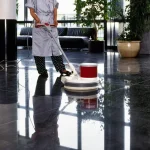
Floor polishing is a process designed to enhance shine and restore the appearance of flooring. Unlike waxing, polishing does not add a protective layer but instead smooths and buffs the existing surface to create a glossy finish.
It is commonly used on materials like marble, terrazzo, and some sealed hard floors. Polishing improves reflectivity and gives floors a clean, professional appearance.
Benefits of Floor Polishing
The primary benefit of polishing is visual enhancement. It restores dull floors and brings back their original shine, making the entire space look cleaner and more professional.
Polishing also helps reduce minor surface imperfections such as light scratches and scuff marks. This improves the overall aesthetic without changing the floor’s structure.
Key Difference: Protection vs Appearance
The main difference between waxing and polishing lies in their purpose. Waxing is focused on protection, while polishing is focused on appearance.
Waxing adds a physical layer to shield the floor, whereas polishing works on refining the surface itself to enhance shine. Understanding this distinction is important when planning long-term floor maintenance strategies.
Durability Comparison
Waxed floors tend to be more durable in high-traffic environments because the wax layer absorbs wear and tear. This makes waxing ideal for areas like hallways, warehouses, and busy retail floors.
Polished floors, on the other hand, require more frequent maintenance to retain their shine. Without polishing, the surface can gradually become dull again due to continuous use.
Maintenance Requirements
Waxed floors require periodic stripping and reapplication to maintain effectiveness. Over time, wax layers can build up, requiring professional removal before new layers are applied.
Polished floors need regular buffing to maintain shine but do not involve layering materials. This makes maintenance simpler in some cases but more frequent in terms of appearance upkeep.
Appearance Differences
Waxing provides a softer, more protective finish that may appear slightly matte or semi-gloss depending on the product used. It prioritizes function over high gloss.
Polishing, however, delivers a high-gloss, reflective finish. It is often preferred in lobbies, showrooms, and corporate offices where visual impact is important.
Cost Considerations
Waxing can involve higher long-term maintenance costs due to the need for stripping and reapplication. However, it reduces floor damage, which can lower replacement costs over time.
Polishing is generally less expensive per session but may require more frequent application to maintain appearance, especially in high-traffic areas.
Best Use Cases for Waxing
Waxing is ideal for floors that experience heavy wear and require protection against damage. This includes industrial facilities, schools, hospitals, and busy commercial corridors.
It is especially useful in environments where durability is more important than high gloss appearance.
Best Use Cases for Polishing
Polishing is best suited for spaces where appearance is a priority. This includes corporate offices, luxury retail stores, hotels, and reception areas.
It is commonly used in areas where creating a strong visual impression is important for clients and visitors.
Can Waxing and Polishing Be Used Together?
In some cases, both methods are used together as part of a complete floor maintenance system. Waxing provides protection, while polishing enhances appearance on top of the wax layer.
This combined approach is often used in commercial spaces that require both durability and visual appeal. However, it must be done correctly to avoid buildup or surface damage.
Professional Floor Care Importance
Both waxing and polishing require proper knowledge, tools, and techniques. Incorrect application can lead to uneven surfaces, residue buildup, or reduced effectiveness.
Professional cleaning services ensure that the correct method is used based on floor type, traffic level, and business requirements. This helps maintain consistent results and extends floor lifespan.
Conclusion
Waxing and polishing serve different but equally important roles in commercial floor maintenance. Waxing focuses on protection and durability, while polishing enhances appearance and shine.
Understanding the difference allows businesses to make better maintenance decisions, ensuring floors remain both functional and visually appealing over time.