


Many businesses use the terms cleaning and sanitizing interchangeably, but they are not the same thing. Understanding the difference is important for maintaining a safe, healthy, and professional workplace. In commercial environments like offices, retail stores, and healthcare facilities, both processes play a role—but they serve different purposes.
In cities with high-density workplaces such as Chicago, where shared surfaces are common, knowing when to clean and when to sanitize helps improve hygiene standards and reduce health risks.
What Cleaning Means
Cleaning refers to the removal of visible dirt, dust, debris, and stains from surfaces. It focuses on making an area look tidy and removing physical impurities.
This process typically involves water, soap, or detergent-based solutions. Cleaning does not kill germs—it only removes them along with dirt and organic matter.
What Sanitizing Means
Sanitizing goes a step further than cleaning. It reduces the number of germs and bacteria on surfaces to a safe level, as defined by public health standards.
This process uses specific chemical agents or approved solutions designed to lower microbial presence and reduce the risk of infection.
Key Difference in Purpose
The main difference between cleaning and sanitizing lies in their purpose. Cleaning improves appearance and removes dirt, while sanitizing focuses on reducing harmful microorganisms.
Both are essential, but they address different aspects of workplace hygiene.
Sequence of Cleaning and Sanitizing
Cleaning always comes first, followed by sanitizing. Surfaces must be cleaned before sanitizing because dirt and debris can reduce the effectiveness of sanitizing agents.
Without proper cleaning, sanitizing products cannot fully reach or eliminate germs on the surface.
Effect on Germs and Bacteria
Cleaning removes some germs indirectly by physically lifting them from surfaces. However, many microorganisms may still remain after cleaning.
Sanitizing is specifically designed to reduce these remaining germs to safer levels, making it more effective for infection control.
Areas Where Cleaning Is Enough
In low-risk areas such as private offices or storage rooms, regular cleaning may be sufficient for daily maintenance.
These areas do not usually require frequent sanitizing unless there is visible contamination or increased risk exposure.
Areas That Require Sanitizing
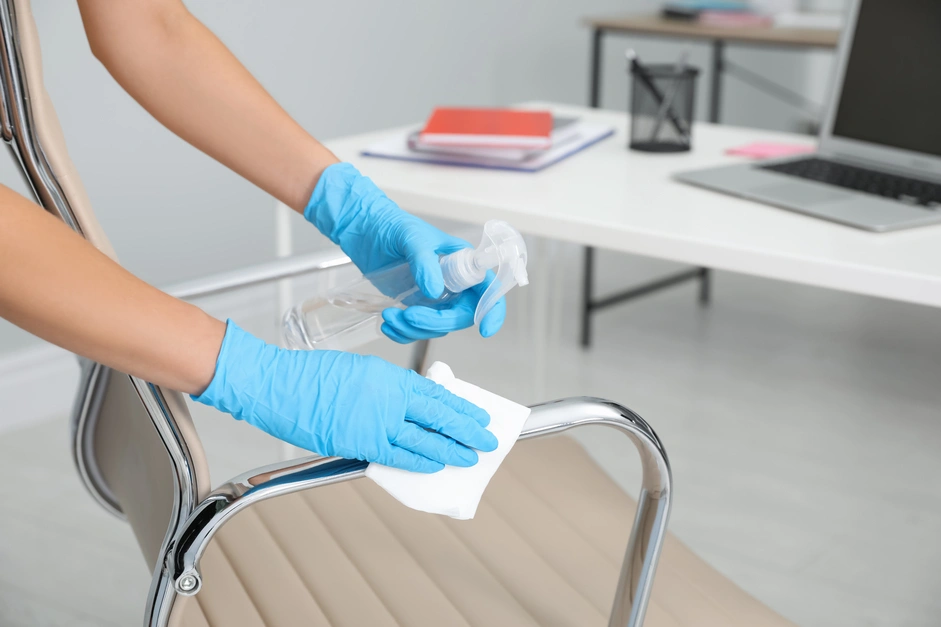
High-touch and high-risk areas require regular sanitizing. These include door handles, shared desks, keyboards, elevator buttons, and restrooms.
Healthcare environments and food-related spaces require even stricter sanitizing protocols due to higher contamination risks.
Frequency Differences
Cleaning is typically done more frequently than sanitizing because it includes general maintenance tasks like dusting and vacuuming.
Sanitizing is done at specific intervals or after cleaning, depending on the level of risk and usage in the area.
Products Used in Each Process
Cleaning uses detergents, soaps, and general-purpose cleaners that remove dirt and grime.
Sanitizing uses chemical agents that are designed to reduce bacteria and viruses to safe levels according to health guidelines.
Impact on Workplace Health
Cleaning improves visual hygiene and overall appearance, while sanitizing directly impacts health by reducing the spread of illness.
When combined, they create a safer and more hygienic workplace environment for employees and visitors.
Role in Commercial Environments
In commercial settings, both cleaning and sanitizing are essential. Offices rely on cleaning for daily maintenance and sanitizing for infection control.
Retail stores and healthcare facilities depend heavily on both processes to ensure customer and patient safety.
Common Mistake Businesses Make
One common mistake is assuming that cleaning alone is enough to maintain hygiene. While cleaning improves appearance, it does not fully eliminate germs.
Without proper sanitizing, harmful microorganisms can still spread across shared surfaces.
Balancing Both Processes
The most effective hygiene strategy combines both cleaning and sanitizing in a structured schedule.
Cleaning should be done regularly, while sanitizing should be applied to high-risk areas and high-touch surfaces as needed.
Professional Cleaning Services Approach
Professional cleaning companies follow a step-by-step process that includes both cleaning and sanitizing. They use appropriate tools and products to ensure maximum effectiveness.
This ensures consistent hygiene standards across all areas of a facility.
Conclusion
Cleaning and sanitizing are two different but equally important processes. Cleaning removes visible dirt, while sanitizing reduces harmful germs to safe levels.
When used together, they create a healthier, safer, and more professional environment in any commercial workspace.